


Introduction
Modern education no longer relies on memorization or passive learning; instead, it depends on interaction, experience, and participation.
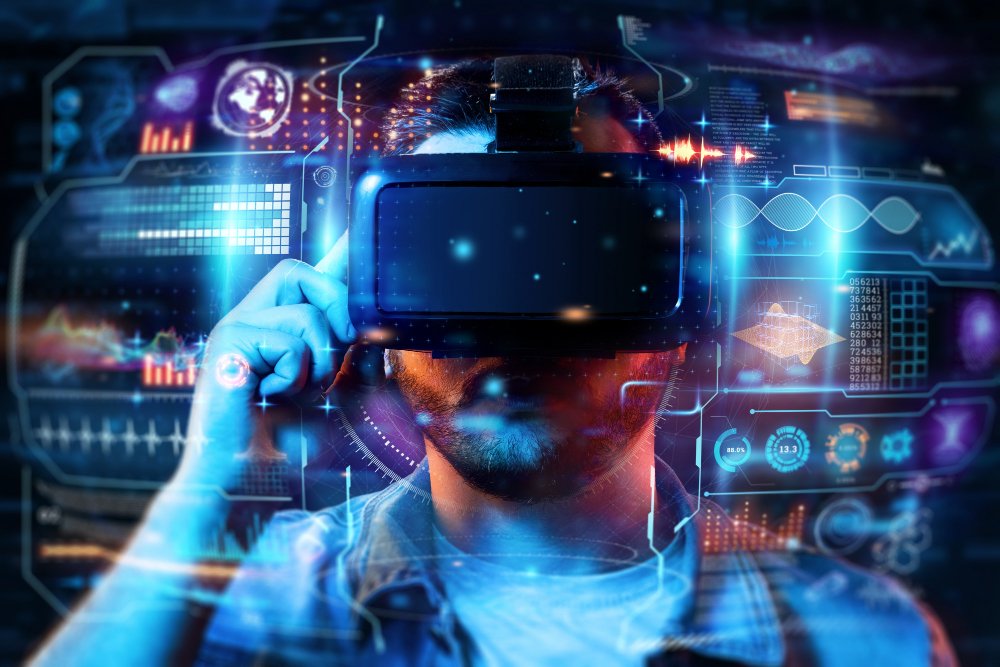
In an era where technology is evolving rapidly, virtual reality (VR) and augmented reality (AR) have become powerful tools reshaping the educational process worldwide — transforming static lessons into exploratory journeys that learners experience with all their senses.
The core idea
Imagine a student learning physics by stepping into a 3D environment where atoms move right before their eyes, or a medical trainee practicing surgery in a virtual operating room with realistic accuracy.
This is the essence of immersive experiences — learning through living, not just observing.
Immersive technologies stimulate long-term memory and increase engagement by up to 70% compared to traditional teaching methods.
They also allow for safe learning environments where mistakes can be made without real-world consequences, making them ideal for industrial, medical, and military training.
Global impact
Governments and educational institutions around the world are investing in immersive interactive content as part of smart city strategies and digital education initiatives.
In the UAE, for example, national programs aim to integrate VR and AR technologies into schools and museums, turning knowledge into a vivid sensory experience.
Conclusion
Immersive experiences are not just the future of education — they are its next revolution.
In a world where technology and knowledge converge, those who understand how to harness immersive learning hold the key to shaping more aware, better prepared minds for the future.